Digital Humans & Biomechanics
The advancement of digital humans and biomechanical simulation is transforming fields ranging from medicine to robotics and virtual reality. By developing computational models of the human body, we can gain deeper insights into movement, injury mechanics, and personalized healthcare. Simulation enables predictive modeling for surgical planning, ergonomic design, and virtual avatars with realistic motion and deformation. However, accurately capturing the complex interplay of soft tissue mechanics, skeletal dynamics, and neuromuscular control remains a significant challenge. Our research focuses on bridging this gap through physics-based simulations, data-driven modeling, and AI-enhanced techniques, pushing the boundaries of digital human representation for real-world applications.
Differentiable Biomechanical Simulation
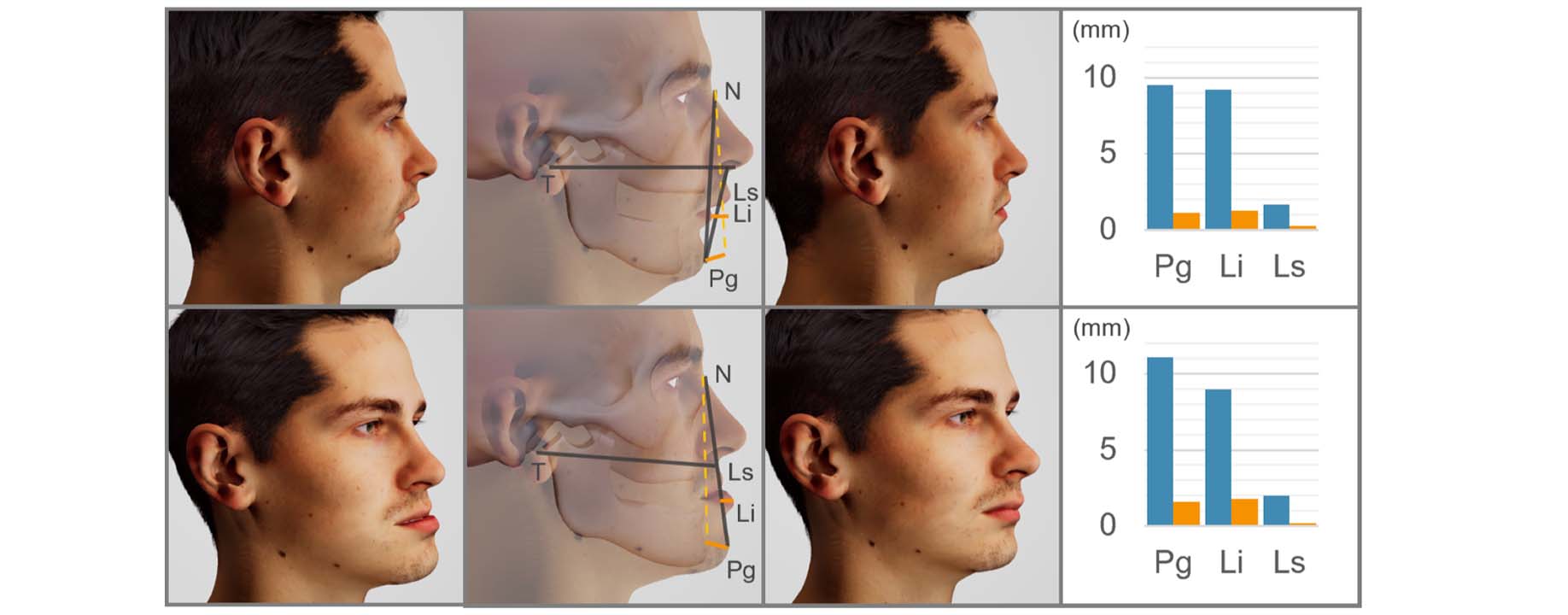
Differentiable Simulation for Outcome-Driven Orthognathic Surgery Planning
Daniel Dorda, Daniel Peter, Dominik Borer, Niko Huber, Irena Sailer, Markus Gross, Barbara Solenthaler, Bernhard Thomaszewski
Computer Graphics Forum (Proc. ACM/Eurographics Symposium on Computer Animation, SCA '22), 2022
PDFVideoProject
Kinesthetic Garments
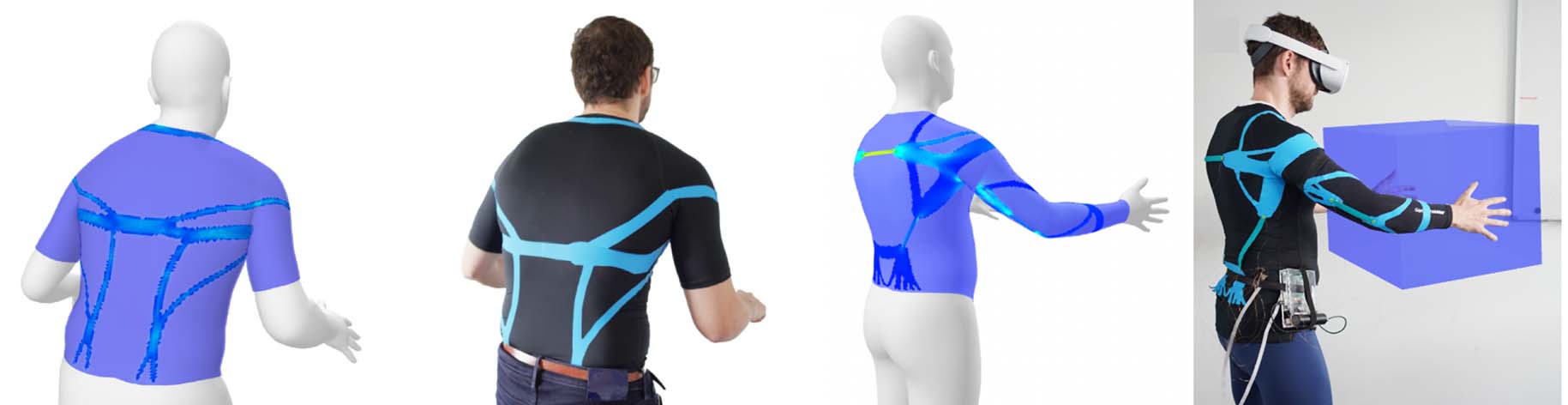
Computational Design of Kinesthetic Garments
Velko Vechev, Juan Zarate, Bernhard Thomaszewski, Otmar Hilliges
Computer Graphics Forum (Proc. Eurographics '22), 2022
PDFVideo
Physics-Enhanced Facial Animation
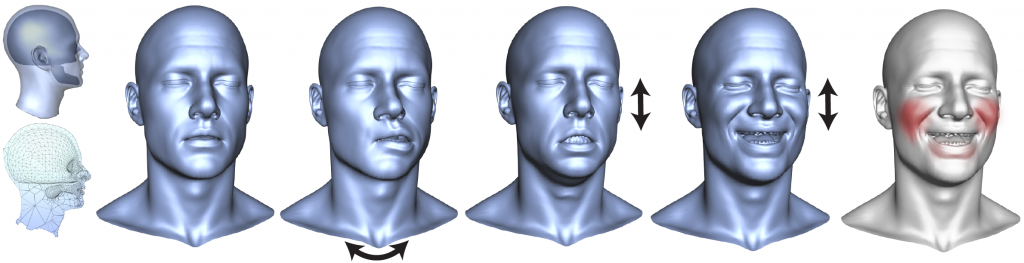
Enriching Facial Blendshape Rigs with Physical Simulation
Yeara Kozlov, Derek Bradley, Moritz Bächer, Bernhard Thomaszewski, Thabo Beeler, Markus Gross
Computer Graphics Forum (Proc. Eurographics 2017)
PDFVideoProject
Neural Baking of Facial Physics
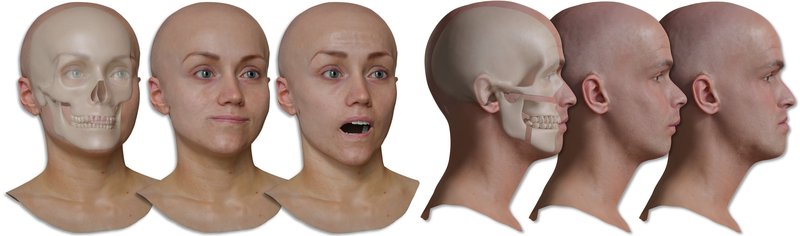
NeuRiPhy: Neural Baking of Physics-Based Deformations for Facial Rigs
Davide Corigliano, Daniel Peter, Niko Huber, Bernhard Thomaszewski, Barbara Solenthaler
Proceedings of the ACM on Computer Graphics and Interactive Techniques, 2025
PDFProject